
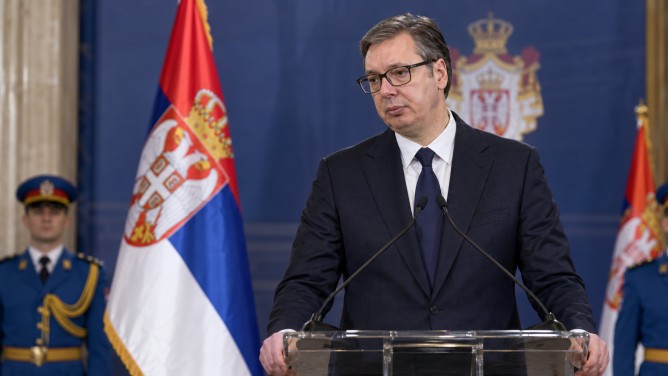
Serbian President Aleksandar Vucic has announced his resignation, ending his second five-year term prematurely and setting the stage for presidential elections anticipated later this year. This political shift comes ahead of Serbia’s snap parliamentary election scheduled for October 25, where Vucic’s Serbian Progressive Party (SNS) will contend with opposition groups, including the student-led Students Win movement and the European Serbia coalition.
Vucic’s resignation could pave the way for him to pursue the role of prime minister, contingent upon the SNS and its allies garnering sufficient support to form the next government. In the interim, under Serbia’s constitution, Parliament Speaker Ana Brnabic will fulfill the role of interim president until a new head of state is elected, with the first round of the presidential election expected by the end of December.
Having been a dominant figure in Serbian politics for over a decade, Vucic served as prime minister before assuming the presidency in 2017. His tenure saw Serbia deepen economic ties with China and maintain relationships with Russia, all while pursuing its long-term goal of European Union membership. Under his leadership, Serbia also bolstered relations with Israel and the United States, exemplified by the opening of a facility for producing Israeli-designed military drones to enhance the country’s defense capabilities.
However, Vucic’s administration has faced growing challenges domestically, particularly following the November 2024 tragedy in Novi Sad, where a railway station awning collapse resulted in 16 deaths. This incident sparked sustained protests demanding accountability, transparency, and anti-corruption measures, leading to increased pressure on the government. In response, several officials have been arrested or resigned, and Vucic has announced pardons and amnesties for numerous individuals connected to the protests.