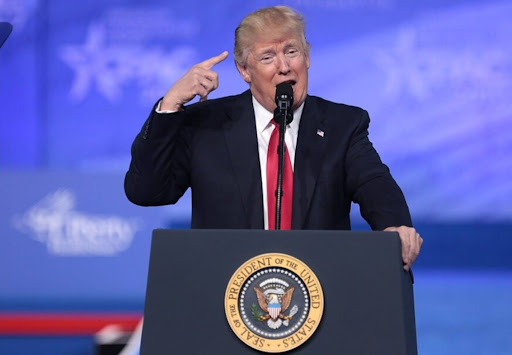
President Trump signaled Thursday that the United States has no intention of standing down in its conflict with Iran, telling reporters that American forces are “not finished yet” even as global oil markets recorded their most severe supply disruption in history. The remarks came alongside a Truth Social post in which Trump declared that preventing Iran from acquiring nuclear weapons is his paramount concern — more important, he said, than the oil price spike now shaking global economies. The president’s dual messaging has left markets and allies searching for clarity.
The conflict has effectively shut the Strait of Hormuz, the vital waterway through which a significant share of the world’s energy supply passes. Gulf producers have slashed output by roughly 10 million barrels per day, representing nearly 10% of global oil demand. The IEA described the resulting disruption as the largest oil supply shock on record and announced a coordinated 400-million-barrel emergency reserve release to help stabilize markets.
On Truth Social, Trump defended the rising oil prices by noting that the United States, as the world’s largest oil producer, earns more revenue when crude prices climb. He then stated that his real focus is stopping Iran — an “evil Empire,” in his words — from obtaining nuclear weapons and bringing catastrophic violence to the Middle East and the globe. He pledged to never allow that outcome under his watch.
Outside the White House on Wednesday, Trump had told reporters that the US had hit Iran harder than almost any country in history has been struck and that military operations were ongoing. These remarks contradicted earlier suggestions from the president that the war was nearing its conclusion. The mixed signals have kept investors and foreign governments guessing about the conflict’s trajectory.
Brent crude surpassed $100 per barrel Thursday before easing back. West Texas Intermediate climbed to nearly $96. The United States has pledged 172 million barrels from its Strategic Petroleum Reserve as part of the broader emergency response. The oil market crisis shows no signs of abating while the military conflict continues.