
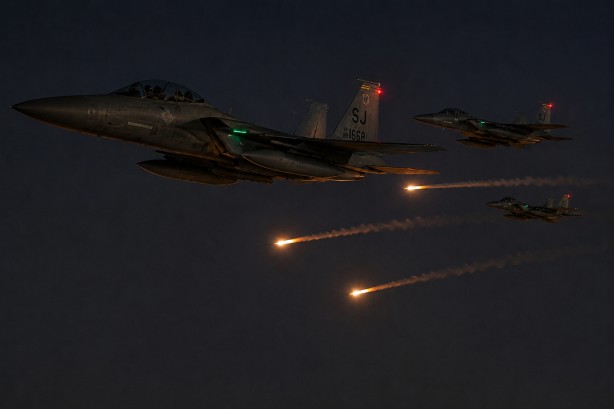
In a significant military collaboration, the United States and Saudi Arabia conducted joint strikes against Iran-backed militia positions in Iraq. This action came in response to a surge of regional attacks that have escalated tensions throughout the Middle East. The US military reported that Iranian ballistic missiles aimed at American forces were successfully intercepted, thereby averting potential damage to a US military base located in Jordan. The US government has issued a warning that any further assaults on its personnel or Saudi energy infrastructure would provoke additional military responses.
The recent operations specifically targeted the Popular Mobilisation Forces (PMF) in Iraq, resulting in the deaths of at least 20 militia members and numerous injuries, as confirmed by officials. This move underscores the growing volatility in the region and the continued threat posed by these militia groups. The situation is further complicated by Iran’s Revolutionary Guards, who have claimed to intercept three oil tankers in the Strait of Hormuz, citing violations of Iranian regulations. This incident has heightened global energy supply concerns and has led to an increase in Brent crude oil prices.
The escalation follows a short-lived lull in hostilities, reigniting uncertainty about the stability of the region. Iraq has initiated an investigation into the recent drone attacks, while Iranian-backed armed groups have denied any involvement. These developments highlight the persistent security challenges facing the Gulf and critical international shipping lanes.
The interception of missiles aimed at US forces and the targeting of militia positions are indicative of the heightened security measures being taken to protect strategic interests in the region. The situation remains fluid, with both the United States and Saudi Arabia closely monitoring developments and readying themselves for further military actions if necessary. As tensions continue to rise, the focus remains on safeguarding personnel and infrastructure from potential threats.
With the global community watching closely, these confrontations illustrate the fragile geopolitical landscape in the Middle East. The international community remains concerned about the potential for further destabilization in a region that is crucial for global energy supplies and economic stability. The actions taken by the United States and its allies reflect a commitment to maintaining regional security amidst ongoing challenges.