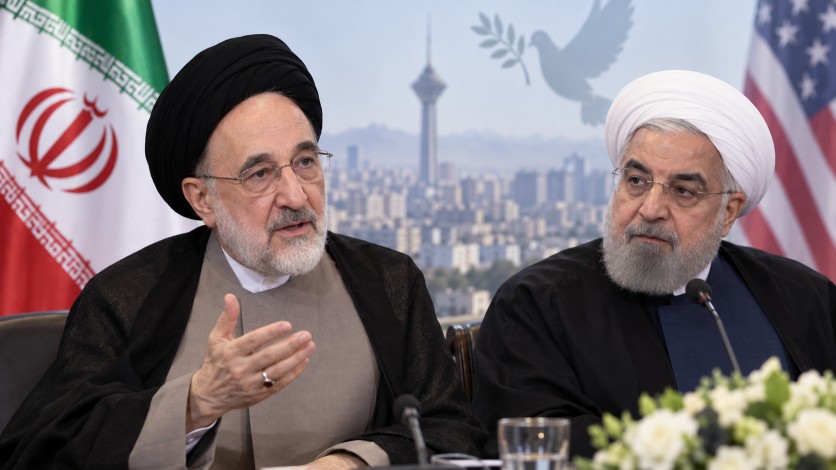
Amidst escalating tensions between Iran and the United States, former Iranian presidents Mohammad Khatami and Hassan Rouhani have urged for an end to hostilities. Advocating for what they term an “honourable” or “dignified” peace, these calls challenge the prevailing hardline rhetoric that has long characterized Iran’s stance. Rouhani has gone a step further, suggesting that the Iranian populace should have a voice in the decision-making process concerning the continuation of the conflict. During a recent assembly with former officials, he raised the question of whether perpetual confrontation with major powers is sustainable if it lacks public support.
Khatami, echoing similar sentiments, cautioned against the governance of Iran through sustained wartime emotions. He has favored diplomacy and negotiations, emphasizing that the nation’s long-term interests should take precedence over ongoing confrontational attitudes. However, these views have sparked significant backlash from Iranian hardliners. Conservative media outlets have accused the former presidents of advocating for surrender, while chants opposing compromise have been heard at loyalist rallies. Additionally, the editor of the hardline newspaper Kayhan has called for investigations into Khatami and Rouhani’s actions.
These discussions emerge at a time when Iran is grappling with mounting economic pressures. Rising fuel costs and decreased oil revenues are compounding the situation, while the strategic importance of the Strait of Hormuz continues to be a focal point for global energy market concerns. Despite these challenges, Iranian officials have maintained a firm stance, indicating that Tehran might consider a more aggressive military approach if diplomatic efforts with Washington do not yield results. This has heightened worries that economic strains could lead to further escalation instead of concessions.
On the regional front, there are signs of ongoing diplomatic engagements. Notably, Saudi Arabia and Iran have sustained communications concerning regional tensions. Senior officials from both nations have been exploring ways to prevent further escalation and enhance stability in the area. These efforts underscore a complex landscape where calls for diplomacy coexist alongside stern warnings of potential military action.
The contrasting approaches underscore a significant divide in Iran’s strategic direction. While former leaders like Khatami and Rouhani push for negotiations and increased public involvement, the current leadership remains steadfast in its warnings of military escalation should its demands remain unaddressed. This dichotomy not only reflects internal divisions but also poses critical implications for Iran’s future diplomatic and military posture.