
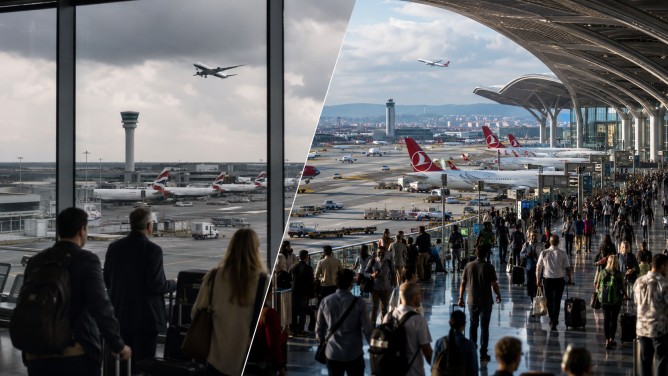
In a significant shift among Europe’s air travel hubs, Heathrow Airport has ceded its title as the continent’s busiest airport to Istanbul Airport, which recorded higher passenger traffic in July. While Heathrow managed a throughput of 7.86 million passengers during the month, Istanbul Airport surpassed this with 8.15 million passengers, reflecting a dynamic change in passenger preferences and airport capabilities.
This development comes as Heathrow’s passenger numbers experienced a 1.5% decline compared to July of the previous year, a downturn partly attributed to the disruptions stemming from conflicts in the Middle East. In contrast, Istanbul Airport reported a 2.3% increase in traffic, highlighting its growing prominence in the region. The shift has intensified calls for the UK government to move forward with Heathrow’s proposed third runway. The airport’s existing two runways are operating near full capacity, and the proposed £33 billion expansion aims to boost annual capacity to about 150 million passengers, potentially revitalizing the UK’s global connectivity and economic prospects.
Since its opening in 2018, Istanbul Airport has rapidly expanded its operations, benefiting from its larger site and around-the-clock operation. It currently operates three runways, with plans to introduce a fourth runway by the end of 2026, further enhancing its capacity to accommodate growing passenger numbers and maintain its competitive edge.
Meanwhile, other UK airports are also experiencing significant growth. London Stansted and Manchester airports both recorded their busiest July on record, handling 3.1 million and 3.4 million passengers, respectively. These figures underscore a broader trend of increasing passenger numbers at key UK airports, despite the challenges faced by Heathrow.
The latest figures from Heathrow and the impressive performance of Istanbul Airport underscore the ongoing evolution of air travel dynamics in Europe. As airports compete to handle rising passenger volumes, the pressure mounts on infrastructure development and operational efficiency to meet the demands of international trade and tourism.