
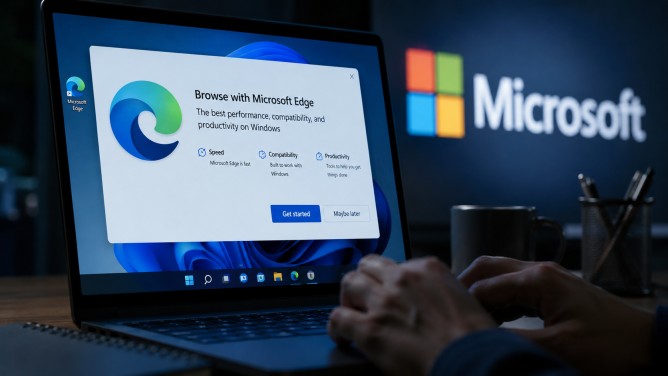
Microsoft is once again under the spotlight as accusations arise regarding its alleged aggressive strategies to push Windows users toward its Edge browser while restricting the usage of rival browsers. A report from Mozilla Research, named Over the Edge 2.0, brings attention to the company’s design choices that reportedly hinder users from downloading, setting as default, and continuing the use of alternative browsers on devices running Windows.
The report claims that Microsoft is actively promoting Edge through Windows, Bing, and Copilot by using features that purportedly dissuade users from switching to competing browsers. Some of the issues pointed out include promotional banners encouraging users of Chrome to transition to Edge, links opening in Edge even when a different default browser is set, and instances where browser preferences are not retained during software updates.
The Browser Choice Alliance, representing companies like Opera, Vivaldi, and Google Chrome, argues that these findings reflect Microsoft’s influence over browser competition globally. The group has urged Microsoft to honor user preferences, advocating for a more equitable browsing environment. Despite these concerns, global browser market data indicates that Google Chrome maintains a dominant position with nearly 70% market share, followed by Apple’s Safari, with Microsoft Edge trailing in third place with just over 5%.
Notably, the protection of browser choice appears to be more robust within the European Economic Area, attributed to the Digital Markets Act regulations that have prompted Microsoft to eliminate some of the criticized practices. However, the report suggests that many of these contentious tactics persist in other regions, including the United States, India, and the United Kingdom.
Industry groups continue to call on Microsoft to make the process of switching browsers more straightforward and to cease practices that they argue are detrimental to competition and consumer choice.