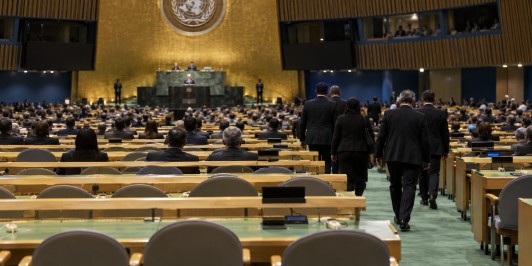
The diplomatic tensions between the United States and both Iran and Cuba escalated at the United Nations General Assembly as representatives from these nations walked out during President Donald Trump’s address. The ramifications of this incident underscore strained international relations, with potential impacts on diplomatic negotiations and economic policies involving the countries.
As President Trump criticized Iran, Iranian representatives vacated their seats. He highlighted ongoing U.S. military operations against Iran and cautioned that further actions could be taken if a deal wasn’t achieved. Such rhetoric suggests an increased possibility of heightened economic pressure or military actions, affecting international diplomatic efforts aimed at stabilizing the region. Iranian President Masoud Pezeshkian and Foreign Minister Abbas Araghchi were present in New York for the event but did not attend the speech.
The situation with Cuba mirrored the tensions with Iran, as Cuban delegates exited the assembly following Trump’s characterization of Cuba as a “failed state.” He asserted that his administration was committed to fundamental changes on the island and emphasized that the U.S. would prevent foreign adversaries from establishing a foothold there. This stance signals potential policy shifts and continued U.S. involvement in Cuba’s political landscape, which could affect bilateral relations and regional stability.
Trump’s speech addressed several international issues, with specific focus on Iran and Cuba, before world leaders gathered at the UN General Assembly. His comments have sparked discussions about the future of U.S. foreign policy and its implications for global diplomatic dynamics. The walkouts highlight the ongoing frictions and set the stage for possible future confrontations or negotiations as countries navigate these complex relationships.