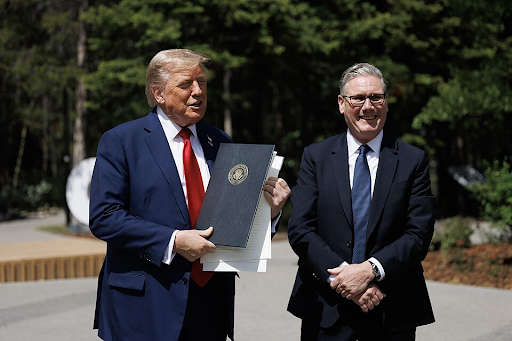
Keir Starmer delivered a blunt message to Donald Trump during weekend discussions: using tariffs against NATO allies in the Greenland dispute crosses a line. The British Prime Minister’s intervention comes as European leaders coordinate their response to what they view as an unprecedented challenge to Western alliance cohesion.
The diplomatic firestorm originated from Trump’s announcement of sanctions targeting eight European countries that deployed troops to Greenland following US pressure on the territory’s status. Starmer’s diplomatic engagement included conversations with Denmark’s Mette Frederiksen, whose country maintains sovereignty over Greenland, along with the European Commission’s Ursula von der Leyen and NATO’s Mark Rutte.
Throughout his weekend consultations, Starmer emphasized that high north security represents a shared NATO priority essential for Euro-Atlantic defense. His characterization of tariffs against allies pursuing collective security goals as fundamentally wrong signals Britain’s alignment with broader European opposition to Trump’s approach.
The targeted European nations jointly condemned Trump’s threats as damaging to transatlantic relations and potentially triggering a negative spiral in Western cooperation. The tariff proposal envisions initial 10% duties beginning February 1st, with potential increases to 25% by summer if Greenland negotiations don’t produce results satisfactory to Washington.
Rather than matching Trump’s aggressive rhetoric, Starmer intends to use Monday’s emergency statement to express firm disagreement while maintaining diplomatic channels. British officials hope that Starmer’s personal rapport with Trump, which has yielded some trade benefits previously, might enable a face-saving resolution that avoids economic warfare between allies.