
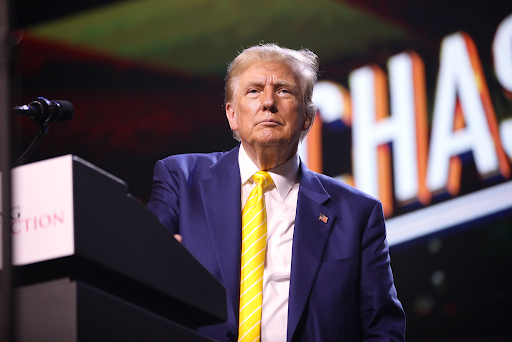
In one of the most dramatic 24-hour stretches in modern American trade policy, President Trump absorbed a landmark Supreme Court defeat and responded not with retreat but with escalation. Within hours of the 6-3 ruling that his IEEPA-based tariffs were unconstitutional, Trump announced a new 15% tariff on all imports using a separate legal authority — making it clear that no court ruling would derail his trade agenda.
The legal vehicle Trump deployed was Section 122 of the Trade Act of 1974, a provision that had never been invoked in its fifty-year history. It permits tariffs of up to 15% for a 150-day window, after which congressional approval is required. Trump described the new rate as “fully allowed and legally tested,” even as legal experts noted that the untested provision could itself face court challenges.
European capitals scrambled to formulate responses. Germany’s Merz announced a coordinated EU approach and warned against the toxic effects of trade uncertainty on business investment. Macron held a press conference championing judicial independence and the rule of law — a clear dig at Trump’s attacks on the Supreme Court justices who ruled against him.
The UK found itself in an awkward position, having previously believed it had secured a 10% tariff arrangement with Washington. Business leaders expressed frustration, warning that the constant shifts in US trade policy make long-term planning virtually impossible. The British Chamber of Commerce called for stability, noting that higher tariffs ultimately harm both trading partners.
Trump’s attacks on the judiciary were unprecedented in their personal intensity. He called justices “unpatriotic,” labeled Barrett and Gorsuch an “embarrassment to their families,” and praised dissenters Kavanaugh, Thomas, and Alito. Notably, while the IEEPA tariffs face legal jeopardy, separate industry-specific tariffs on steel, aluminum, lumber, and autos remain fully intact — leaving the overall tariff architecture largely in place even amid the legal turbulence.